Replacement and installation
AC replacement and installation in Bakersfield
A new central air conditioner is a large job with a permit, state energy testing and choices that last a long time. Call to talk it through with an independent, licensed HVAC contractor.
When replacement comes up
Replacement usually enters the conversation for one of three reasons. The compressor has failed on a system that is already old. A leaking coil keeps losing refrigerant. Or repairs have become so frequent that each summer starts with another visit.
It also comes up when a house is being remodeled, when a room addition needs cooling, or when a home that never had central air is being fitted with it for the first time.
The permit comes first
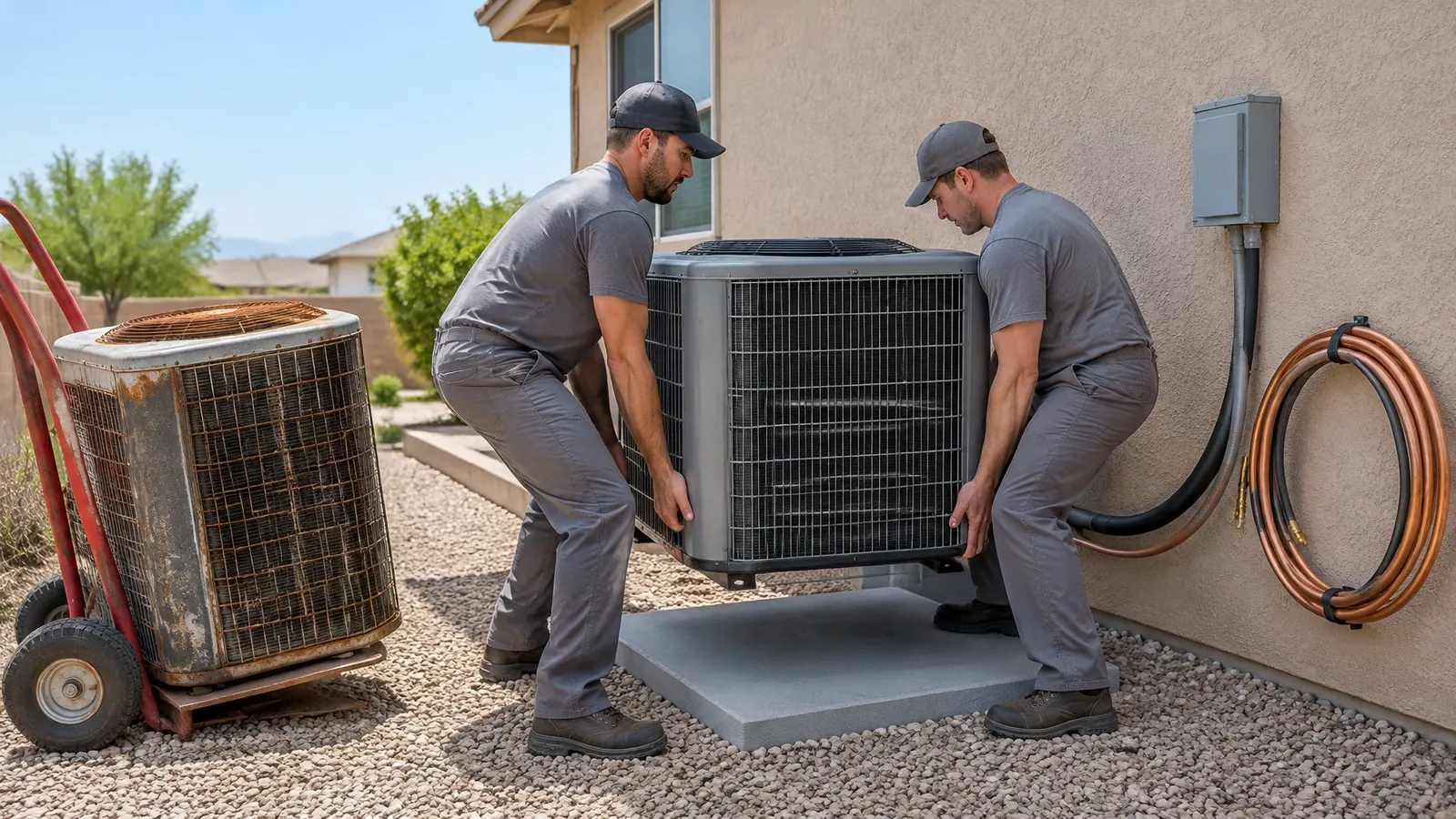
The California Energy Commission states plainly that a permit is required in California when an HVAC unit is replaced or altered, and advises hiring a licensed contractor who will pull it through the local building department. The Commission also warns that skipping the permit can cost more over time, expose the owner to insurance trouble and reduce the value of the house.
Inside Bakersfield city limits the permit comes from the city's Building Division, which lists air conditioner installation among the jobs that need one. Its office is on the first floor of the Development Services Building at 1715 Chester Avenue. For homes in unincorporated Kern County, the county's Building Inspection office on M Street handles it.
- Ask whether the price includes the permit and the inspection.
- Ask who schedules the inspection and who meets the inspector.
- Keep the final, signed-off permit with your house papers.
Duct testing and the energy code
California's energy code reaches into replacement jobs, not only new houses. According to the Energy Commission's single-family HVAC guidance, replacing the outdoor unit or the indoor unit of a split system on its own triggers the duct sealing requirement. The existing ducts are tested for leakage, and if they cannot meet the target, a rater may accept a smoke test and visual inspection instead.
The same guidance calls for refrigerant charge verification on new air conditioners in climate zones 2 and 8 through 15. Bakersfield sits in building climate zone 13 on the Commission's map, so that check applies here.
These checks are done by an independent rater, not by the installing contractor. The rater's sign-off is part of closing the permit.
Sizing is a calculation, not a guess
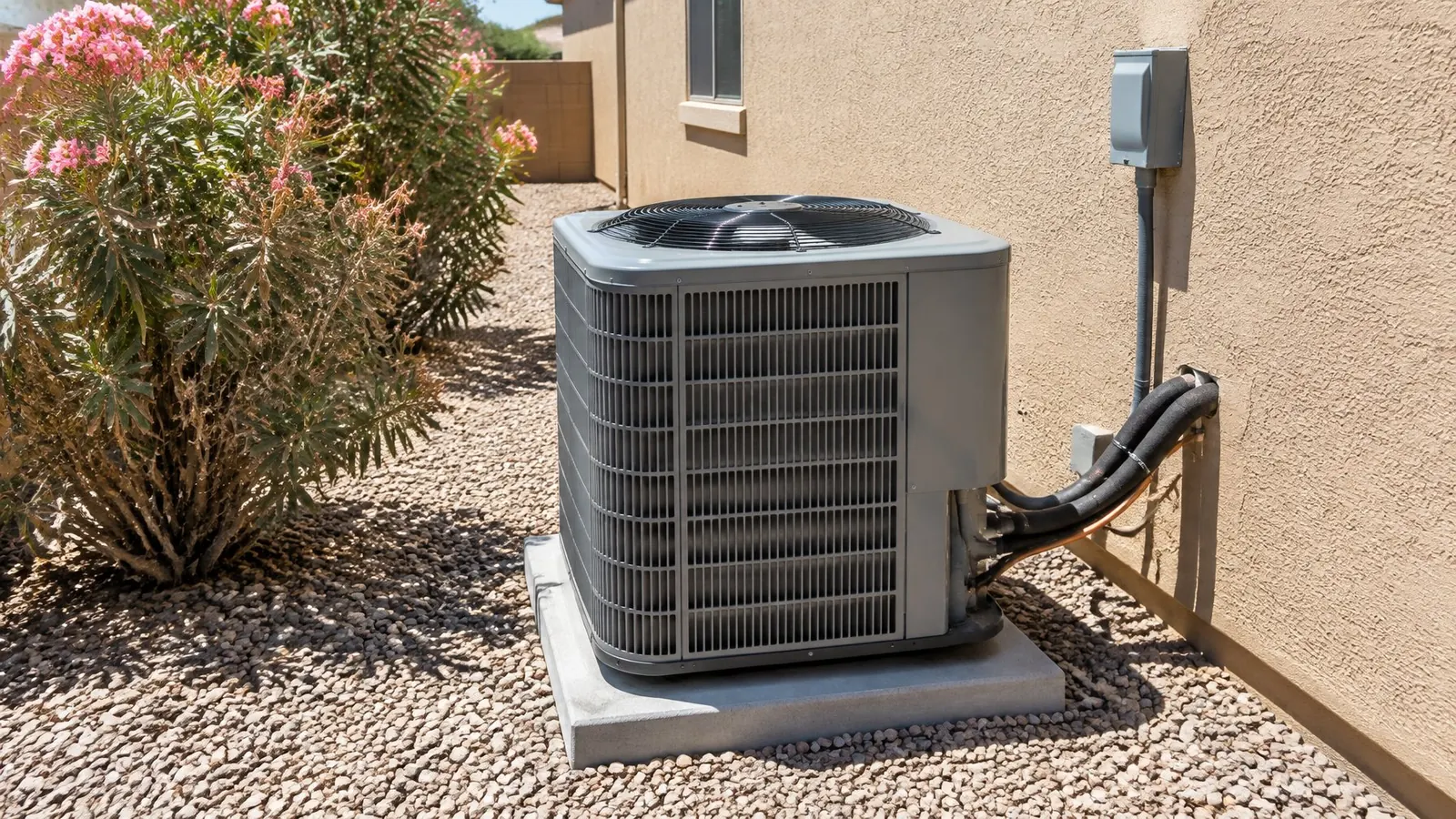
A system that is too large cools the house in short bursts, shuts off before it pulls moisture out of the air, and cycles hard on its parts. One that is too small runs all afternoon in August and still falls behind. The right size comes from a load calculation that looks at the house itself: floor area, window area and direction, insulation, duct location and how many people live there.
Ask whether the contractor will run a load calculation or simply match the size of the old unit. The old unit may have been the wrong size from the start, and a house with new windows or attic insulation may need less capacity than it once did.
Matching the indoor half
A central air conditioner is two halves that have to suit each other. The outdoor condenser pairs with an evaporator coil inside, usually sitting on top of the furnace. Replacing only the outdoor unit and keeping an older coil can leave the pair mismatched in capacity or refrigerant type.
If the furnace is old as well, some owners replace both at once, since the coil sits on the furnace and the labor overlaps. The furnace replacement page covers that side. A ducted heat pump, which heats and cools through the same ductwork, is another option to ask about.
The old refrigerant
Ask which refrigerant the old system uses. Some older systems run on a type that is getting harder to buy, which is one more reason owners lean toward replacement after a major leak. Whatever the type, the old charge has to be recovered by a technician certified under EPA Section 608 rules before the old unit is hauled away.
Install day, in order
Every job differs, but most replacements follow this order.
Power off and recovery
The technician shuts off power at the panel and disconnect, then recovers the refrigerant from the old system.
Old equipment out
The condenser comes off its pad, and the old coil comes out if it is being replaced.
New pad and unit
A level pad goes down if needed, and the new condenser is set with proper clearance from walls and shrubs.
Lines and wiring
Refrigerant lines are connected or replaced, brazed and pressure tested, then pulled into a deep vacuum.
Start-up
The system is charged and started, and the contractor checks temperatures, airflow and drainage.
Testing and inspection
Duct leakage and charge are verified by a rater, and the building inspector signs off the permit.
What moves the price
There is no single price for a new system, and this site does not quote one. What changes the number:
- Capacity and efficiency rating of the new equipment
- Whether the indoor coil, the furnace or both are replaced at the same time
- Condition of the ducts, and how much sealing it takes to pass the leakage test
- Access: roof units, tight side yards and attic platforms take more labor
- Electrical work if the disconnect or wiring does not suit the new unit
- Permit and testing fees
Ask for each quote in writing and for the same scope of work, so the numbers are comparable.
Common questions
How long does a replacement take?
A straight swap of a condenser and coil is often finished in a day. Add a furnace, duct repairs or electrical work and it can run longer. The inspection and duct testing are scheduled separately.
Can I replace only the outdoor unit?
Sometimes, if the coil is fairly new and matches. Many contractors recommend replacing both halves together. Either way, the energy code's duct sealing requirement applies.
Do I need to be home for the rater and the inspector?
Someone usually has to let them in. Ask the contractor how they handle scheduling.
What should the written agreement include?
The equipment make and model, the scope of work, who pulls the permit, the price and payment schedule, and the contractor's license number. The hiring guide has a fuller list.
Where these facts come from
Talk it over with a contractor
Say what the system is doing and where the house is. You will be speaking with an independent HVAC contractor who works in Bakersfield and the towns around it.