AC repair
Air conditioner repair in Bakersfield
A central air conditioner that stops cooling in July is a problem you want looked at soon. Call to reach an independent contractor and describe what the system is doing.
Breakdowns that come with long hot runs
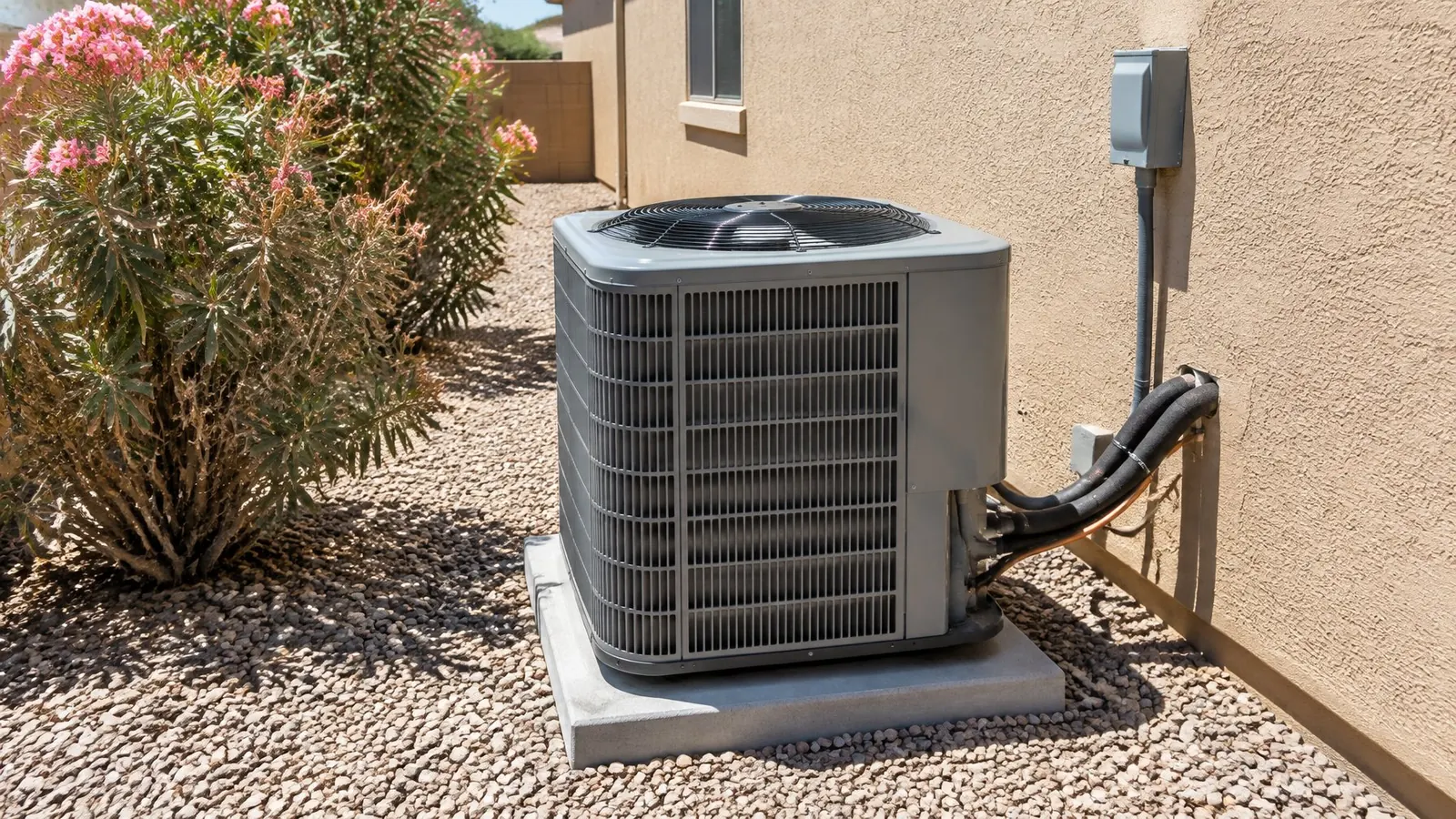
Equipment in the southern San Joaquin Valley runs for long stretches through the summer, often into the night. Parts that wear with heat and run time fail most: the capacitor that starts the compressor and outdoor fan, the contactor that switches them on, and the fan motor itself.
When a capacitor weakens, the outdoor unit may hum for a few seconds and trip off, or the fan may need a push to turn. A contactor with pitted points can leave the compressor running after the thermostat is satisfied, or keep it from starting at all.
- Hum or buzz outside with no fan movement
- Breaker that trips again after a reset
- Air from the vents warmer than usual by late afternoon
- Outdoor fan running while the compressor stays silent
Things you can safely check first
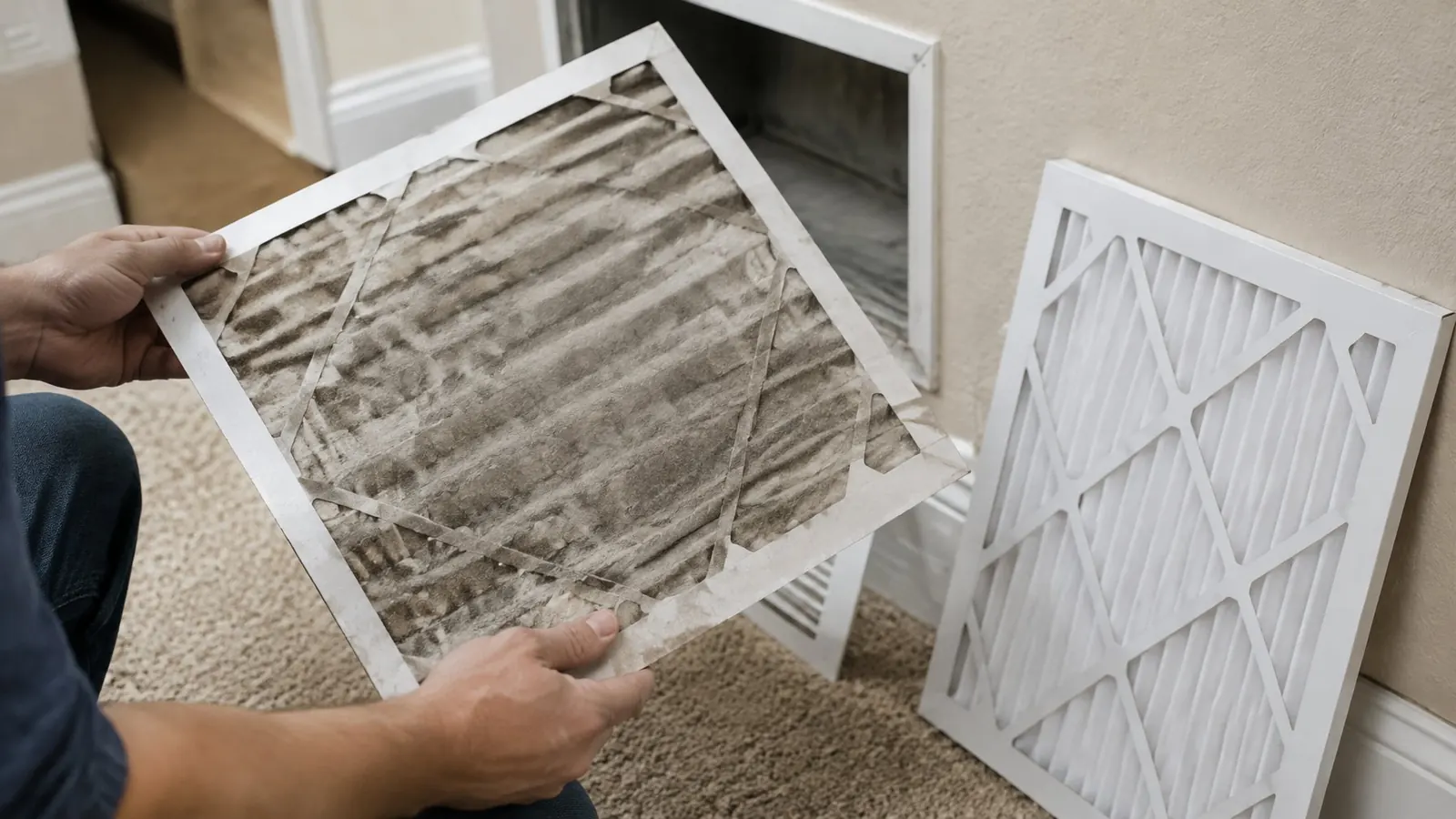
Make sure the thermostat is set to cool and the set point is below the room temperature. Replace the batteries if the display is faint. Look at the filter. A filter grey with dust can cut airflow enough that the coil freezes.
Check the breaker panel and the outdoor disconnect box. Reset a tripped breaker once. If it trips again, leave it off and call: repeated tripping points to a short or a failing part, and resetting it again can damage the compressor.
What happens on a repair visit
Questions first
The contractor asks what you noticed and when it started, then checks the thermostat and filter.
Electrical checks outside
With the power off, the technician tests the capacitor, contactor and wiring at the condenser.
Pressures and temperatures
Gauges or probes on the refrigerant lines show whether the charge and airflow are where they belong.
Indoor side
The coil, blower and condensate drain are checked, since many outdoor symptoms start indoors.
A written price
You get the repair and its price before work starts. You decide whether to go ahead.
Refrigerant work needs certification
Adding or recovering refrigerant is not a homeowner job. Federal rules under Section 608 of the Clean Air Act require technicians who maintain, service, repair or dispose of equipment that could release refrigerant to be certified by EPA.
A system low on refrigerant has a leak somewhere. Topping it up without finding the leak usually means another call later in the summer. Ask the contractor whether a leak search is part of the visit.
Common questions
Is it worth repairing an old air conditioner?
Sometimes. A failed capacitor on a ten-year-old system is usually a sensible fix. A failed compressor on an old system often is not. The repair or replace guide covers the questions that decide it.
Can I keep running the AC while it makes a grinding noise?
Turn it off. Grinding often comes from a fan motor bearing or a blade striking something, and running it can turn a small repair into a larger one.
The outdoor unit is on the roof. Does that change anything?
Access takes a ladder and more care, so mention it on the call. The diagnosis itself is the same.
Talk it over with a contractor
Say what the system is doing and where the house is. You will be speaking with an independent HVAC contractor who works in Bakersfield and the towns around it.