Guide
Ice on the lines, water on the floor
Ice in July sounds backwards, but a frozen coil is a common cooling problem. So is water pooling where the indoor unit drains. The two are often linked.
Why a coil freezes
The indoor coil runs below freezing on purpose only when something is wrong. Normally, warm air moving across it keeps the surface just above freezing while it pulls heat and moisture from the house. Cut the airflow or lower the refrigerant charge and the coil gets colder than it should. Moisture freezes on it, the ice blocks more air, and the cycle feeds itself.
Ice often shows first on the large, insulated copper line at the outdoor unit.
- A clogged filter or blocked return
- A blower motor running slow or not at all
- Low refrigerant from a leak
- Dirty indoor coil fins

If you see ice
Turn cooling off
Set the thermostat to Off. Running a frozen system can push liquid refrigerant back to the compressor.
Run the fan
Set the fan to On so room air helps melt the coil. It can take several hours.
Watch for water
As the ice melts, the drain pan fills fast. Put towels down near the furnace or air handler.
Change the filter
If it is dirty, replace it now.
Call before restarting
If the coil froze with a clean filter, there is a charge or blower problem to find.
Condensate: where the water goes
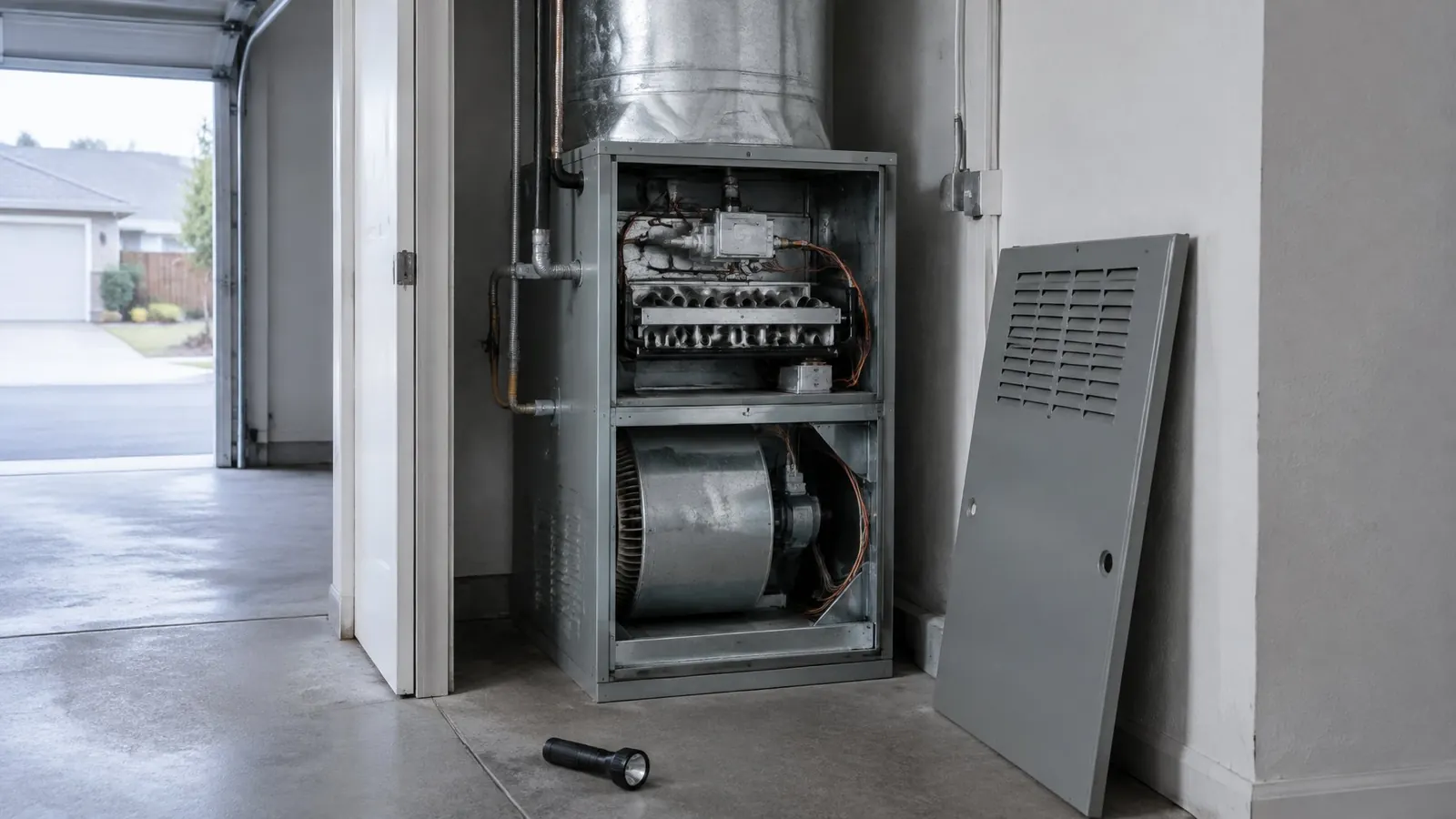
An air conditioner pulls water out of the air. That water drips off the indoor coil into a pan and leaves through a drain line, usually PVC pipe running outside or to a drain. In a garage furnace the line often exits low on the wall. In an attic unit there is usually a secondary pan underneath as a backup.
Algae, dust and debris build up in the line over a season. When it clogs, the pan overflows. Many systems have a float switch that shuts the air conditioner off when the pan fills, which looks like a sudden breakdown on a hot day.
Signs the drain is the problem
Water on the floor by the furnace. A stain on the ceiling below an attic unit. A system that stops cooling suddenly while the thermostat and breakers look fine. Water dripping from the secondary drain outlet, which is often placed over a window so you will notice it.
A contractor can clear the line, check the pan and test the float switch. Mention any ceiling stain, since an overflowing attic pan can soak drywall.
Common questions
Can I pour something down the drain line?
Ask the contractor what suits your system. Some owners flush the line with plain water at the access port during a tune-up; a stubborn clog needs the line cleared properly.
Will a frozen coil damage the system?
It can. Running the compressor with a frozen coil risks liquid refrigerant reaching it. Shutting cooling off promptly is the main protection.
Talk it over with a contractor
Say what the system is doing and where the house is. You will be speaking with an independent HVAC contractor who works in Bakersfield and the towns around it.